
"mild arabica"
4000 article(s) found
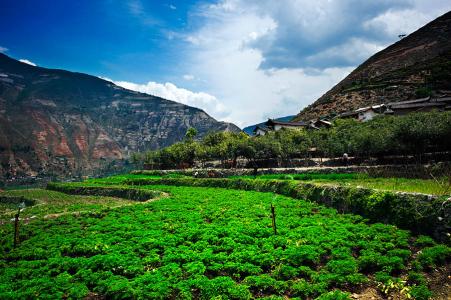
Description of planting area and Flavor of Arabica Coffee beans in Sumatra
The planting area and flavor of Arabica coffee beans in Sumatra describes that Arabica coffee is difficult to grow. They like mild days and colder nights, and a climate that is too cold, too hot, and too humid can be fatal. Coffee trees in Arabica need to be planted on sloping slopes at high altitude. they grow luxuriantly in the highlands (600-1800 meters).

Honduras Coffee Types Honduras Coffee Types
Arabica coffee trees originating in Ethiopia account for 70% of the world's coffee bean production; world-famous blue mountain coffee, mocha coffee, etc., are almost all Arabica species. Arabica coffee trees are suitable for high mountains with large temperature differences between day and night, and soil with low humidity and good drainage. The ideal altitude is 500 meters to 2000 meters. The higher the altitude, the better the quality.

A brief introduction to the flavor, taste and aroma characteristics of fresh Ugandan boutique coffee beans
This coffee is produced in the Mount Elgonne region of Uganda. Balanced acidity and rich oil between 1600 and 1900 meters above sea level are the characteristics of this coffee. It tastes mild and simple, with a papaya flavor. Dry aroma (1-5): 3.2 wet aroma (1-5): 3.4 acidity (brightness) (1-10): 8 taste (hierarchy) (1-10): 8.5 taste (alcohol thickness)

The coffee flavor of Ecuador's Hassanda Coffee Garden is mild in taste and with light grass.
The National Congress of Ecuador adopts a unicameral system. There are a total of 124 members, including 15 members from the whole country, 103 from provinces and 6 from overseas. The current Congress was formed in April 2009 and was formally sworn in on July 31 for a four-year term. The seats held by each party in parliament are as follows: 59 seats for the ruling Party, 59 seats for the Sovereign Motherland Movement, 19 seats for the 121 Patriotic Community Party, 7 seats for the Institutional Reform Party, and 7 seats for the cities.

What are the representative and standard types of Arabica varieties of coffee beans
Coffee beans are mainly divided into Arabica species (CoffeeArabica) and Robusta species (CoffeeRobusta). Arabica coffee beans are oval in shape, zigzag in grooves and rich in flavor, so most of the manor coffee is planted in Arabica. Although it is

Mantenin coffee beans with the strongest aroma introduce boutique coffee
Mantenin's leaping acid mixes with the richest aroma, making your relaxed body manning coffee lively in a mild fragrance, and its outstanding taste captivates many suitors. In the 17th century, the Dutch introduced Arabica seedlings to Ceylon (present-day Sri Lanka) and Indonesia. In 1877, a large-scale disaster struck Indonesia

Introduction to the flavor and taste of Costa Rican coffee manor with rich and mild taste
All the coffee trees planted in Costa Rica are Arabica coffee trees. through improvement, the quality of coffee beans is better and more stable. in order to facilitate picking, coffee trees are kept at a height of about 2 meters through continuous pruning. The coffee that people eat is the taste of the seeds in the fruit that are brewed in water. After picking raw coffee beans, the peel, pulp, seed film and sun exposure must be removed.

The rich flavor of Colombian coffee describes the production process of the planting environment in the variety producing area.
Colombia has beautiful mountains and rivers, beautiful scenery, pleasant climate, spring all year round, fresh air and refreshing air. Colombia's mild climate, humid air, and diverse climate make it a harvest season all year round, with different kinds of coffee ripening at different times. What they grow is Arabica coffee beans of unique quality, and the coffee made from this coffee bean has a strong flavor.

Species of coffee trees in Ethiopia
The Arabica coffee tree, which originated in Ethiopia, accounts for 70% of the world's output of coffee beans; the world-famous Blue Mountain Coffee and Mocha Coffee are almost all Arabica species. The coffee trees planted in Arabica are suitable for growing in high mountains with large temperature difference between day and night, as well as soils with low humidity and good drainage; the ideal altitude is 500m ~ 2000 m, and the higher the altitude is, the better the quality is.

Are the best coffee beans in Panama expensive? Panamanian coffee bean grade price list
For more information on coffee beans, please follow the coffee workshop (Wechat official account cafe_style) official coffee production in Panama began in the early 20th century and was grown in the westernmost valleys and mountains of the country, mostly Arabica coffee beans with mild taste, producing 82% Arabica and 18% Robusta varieties, respectively. Plant 2300 above sea level

An introduction to how many kinds of coffee beans are available in the world
Brazil is the producer of coffee, all grades and types of coffee account for 1/3 of the global consumption. There are many kinds of coffee here. Although there is not much superior coffee, it can be used to make mixed coffee with other coffee. The characteristics of the taste: mild, moderate bitterness, soft aroma. The best frying degree: the output of coffee rich in Colombia is second only to Brazil.

Coffee Culture of Sumatra Manning Coffee
Manning coffee is full of slight acid, mixed with the richest aroma, making it very easy to appreciate the lively factors in the mild and rich flavor. It confuses many suitors with its outstanding taste. The Dutch first introduced Arabica saplings to Ceylon and Indonesia in the 17th century. Ceylon is what is now Sri Lanka. In 1877, a massive disaster struck.

Costa Rican coffee beans roasting degree grinding treatment method brief introduction
Costa Rica's high latitudes produce coffee beans famous in the world, rich, mild taste, but extremely sour, coffee beans here are carefully processed, it is because of this, only high-quality coffee. Tarasu, south of San Jos, Costa Rica's capital, is one of the country's most prized coffee plantations. Tarrazu in the World
Mexican Coffee Encyclopedia
Location: North America area: 1973000 square kilometers population: 11211800 people official language: Spanish (Spannish) Coffee planting area: 744500 ha Coffee yield: 6.33 million 8 thousand bags of Coffee varieties: mainly Arabica, a small amount of Robusta coffee characteristics: low consistency, mild but with sweet flavor overall grade: good special producing area

Peruvian coffee is 100% organically grown from Arabica varieties
Peruvian coffee is grown in an area with temperatures of 1826 degrees and annual precipitation of 700,1500 mm. It is 100% Arabica and is certified as organic by the International Organic Crop Development Association (CCIA). Fresh cheese and caramel aromas, sweet aftertaste lingering, mild, light coffee production. Peru S.H

A brief introduction to the treatment of grinding degree and baking degree of fresh-flavored Ugandan boutique coffee beans
Strength / main attribute: medium strength / high oil content, simple and mild recommended roasting degree: full city or full city+ comparison: a unique African coffee, very similar to Indonesian coffee, Ugandan coffee is mainly exported to the European Union, of which Germany, Italy and other countries are the largest buyers of coffee. Country of production: Uganda Grade: HB planting area: Elgon region
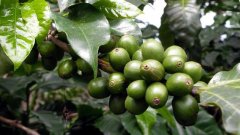
Coffee bean production in China is about to increase
The price of Arabica coffee beans has risen 73 per cent so far this year amid a drought in Brazil, the world's largest grower of Arabica coffee beans, and concerns about production next year amid persistent dry weather. According to the report, China accounts for less than 1% of global coffee production, but the global limited supply of Arabica coffee and its production

Panamanian Angel Kiss BESO DE ANGEL introduces Panamanian coffee flavor
For more information on coffee beans, please follow the coffee workshop (Wechat official account cafe_style) official coffee production in Panama began in the early 20th century and was grown in the westernmost valleys and mountains of the country, mostly Arabica coffee beans with mild taste, producing 82% Arabica and 18% Robusta varieties, respectively. Plant altitude 2pc30
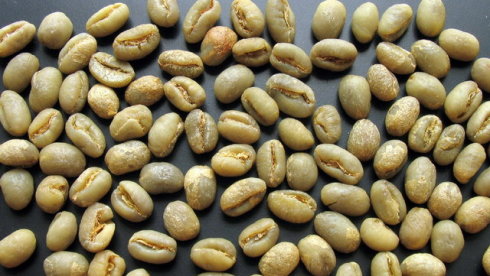
Tanzania Coffee Green Bean Kilimanjaro AA Black Plum Flavor Balanced Acidity Soft Mild
Political instability and pest infestation have disrupted Tanzania's coffee industry, leading to a decline in overall coffee levels and instability in quality, which in turn has led to lower prices, which usually result in further declines in the coffee industry. More notably, it is estimated that from 1969 to 1985 more than 12 per cent of the Arabica coffee grown in northern Tanzania was lost.

Colombian Coffee-the most memorable flavor
Colombia's mild climate, humid air, and diverse climate make it a harvest season all year round, with different kinds of coffee ripening at different times. What they grow is Arabica coffee beans of unique quality, and the coffee made from this coffee bean has a rich taste and endless aftertaste, which can be called fine coffee. Nowadays, many people combine Colombian coffee with high quality and delicious coffee.